AI on the Other Side of Fraud
When Fraudsters Get the Same Tools
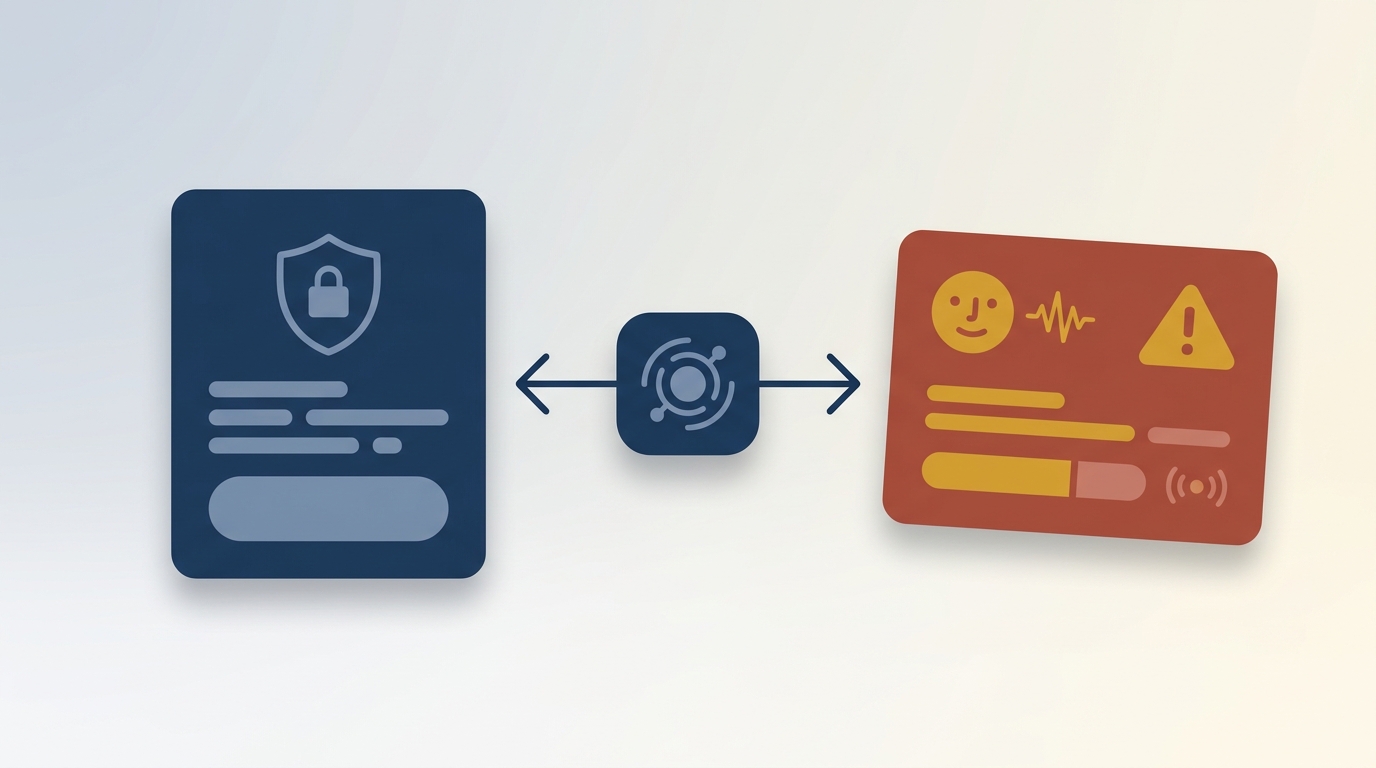
The unsettling part of this moment in fraud is not that banks finally have powerful AI to defend themselves. It is that the people attacking them have the exact same tools. I have watched the threat change shape over the past couple of years, and what stands out most is the asymmetry. AI helps the defender, but it helps the attacker at least as much, and in some ways more.
The Asymmetry
Defense scaling with AI is real. A model can watch more signals, spot more anomalies, and surface more patterns than a team could on its own. But the attacker's side scales too, and the underlying math has always favored the attacker. The defense has to be right everywhere, every time. The attacker only has to find one opening once.
What AI changes is the cost of looking for that opening. Attacks that used to take effort and skill, a convincing forged document, a believable impersonation, a personalized lure, are now cheap to produce and easy to run at volume. The same capability that strengthens the bank's defense hands the attacker enormous reach for almost nothing.
Where the Old Signals Break
The gap shows up most clearly in how we prove someone is who they claim to be. A lot of authentication quietly relied on things that used to be hard to fake. A voice on the phone. A photo of a driver's license. A face on a video call. A fact only the real person should know.
AI is now good at faking exactly those things. A voice can be cloned from a few seconds of audio. A document can be generated that passes a casual look. A live video face can be synthesized. So voice authentication and document verification, which felt solid not long ago, have become pressure points. The signals did not get weaker. The tools for forging them got dramatically better.
What I'd Prioritize
The takeaway is simple. Stop trusting any single signal as proof. If a voice, a document, or a face can be synthetic, then none of them can stand alone. The defense that holds up is layered. Combine signals instead of leaning on one. Weight the things that are harder to fake at scale, like device and behavioral patterns and the history of how an account actually behaves. Confirm important actions out of band, through a separate channel the attacker does not control. Treat authenticity as something to verify, not assume.
None of this is a single clever detector. It is defense in depth, designed around the assumption that any one artifact handed to you might be manufactured. That assumption used to sound paranoid. Now it is just realistic.
Where I'm Worried
A few things worry me. The first is speed and scale, attacks that can be personalized and run by the thousands, faster than manual review can keep up with. The second is the human target. A cloned voice of a family member or a familiar colleague is a different kind of attack than a phishing email, and people are right to find it frightening. The third is that the smaller an institution is, the harder this gets, because the same industrialized attacks reach everyone while not everyone has the resources to build layered defense.
AI did not invent fraud. What it did was strip away the friction and the skill that used to limit it, and break the comfortable assumption that some things are simply hard to fake. The answer will not be one magic system that catches everything. It will be the slower, less exciting work of trusting no single signal and building defense in layers, and starting that work before the attack arrives rather than after.