Where Autonomy Stops Inside a Bank
Automated, Not Autonomous
There is a vision that floats around about the fully autonomous bank, AI handling everything end to end, people barely in the loop. Having spent real time building with these tools and working through what it takes to govern them, I do not believe in that destination, and not only for the reasons people expect. The more useful question is not how autonomous a bank could become. It is where autonomy should stop, and why part of that line is permanent rather than just a limit of today's technology.
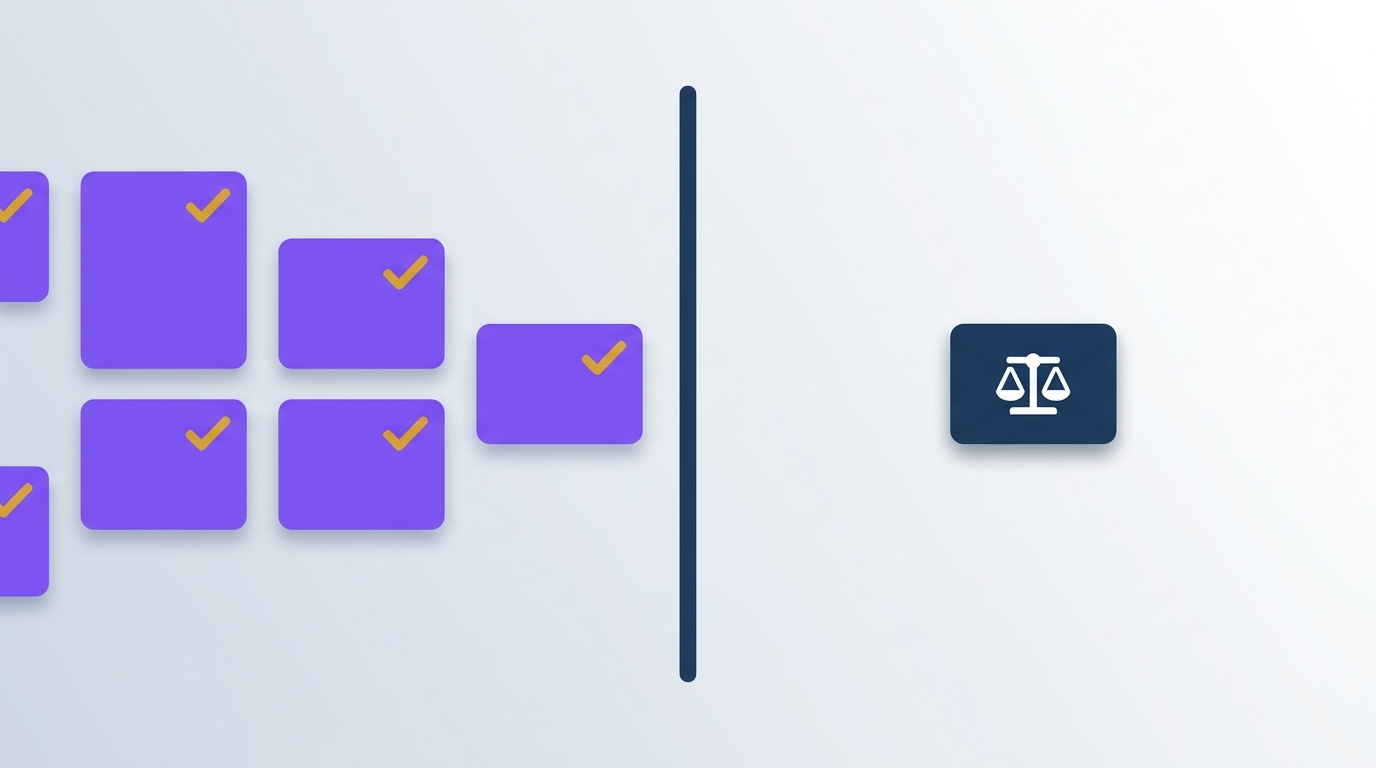
What Can Be Automated
More than the skeptics admit. The routine, high-volume, pattern-heavy work that a person can review is increasingly fair game. Processing documents. Monitoring for compliance issues. Generating the first version of a report. Flagging and handling the routine end of fraud. A lot of the day-to-day grind in a bank fits that description, and the capability to take it on has improved faster than I expected even a year or two ago.
That is the part worth being clear-eyed and even optimistic about. Pointing capable automation at the toil is good for the institution and good for the people doing the work, who get their time back for the parts of the job that actually use their judgment.
Where It Stops
Then there is the work that does not hand off, and I do not think it ever fully will. Complex judgment in a situation no one has seen before. The relationship that makes a community bank worth choosing. Sitting across from an examiner. The strategic calls about what the institution should become. These are not gaps waiting for a better model to fill them.
The reason is accountability. A bank is responsible for what it does, and responsibility has to rest with someone who can be held to it. You cannot hand accountability to a system that cannot be answerable for the outcome. That is not a technical limitation scale will erase. It is built into what a bank is, an institution that runs on trust and has to own the consequences of its choices.
Why the Machines Stay Supervised
Even where the technology keeps improving, autonomous action stays gated, and that is the right call. The capabilities have genuinely surprised me on the upside, how fast they improve and how broadly they apply. They have also disappointed in the specific ways that matter most for acting alone. Reliability is still not where it needs to be for unsupervised decisions. Explainability is thin, and a bank often has to explain why something happened. And the tendency to be confidently wrong has not gone away.
So the bar for letting a system act on its own, with no person between it and the consequence, stays high. Closing that gap is as much about governance maturity as raw capability. The technical progress keeps arriving faster than the frameworks to deploy it safely, and the order still matters.
The Real Target
The realistic destination was never the autonomous bank. It is the highly automated bank, where the machines carry the toil and the people are pointed at what only people do well, the judgment, the relationships, the hard calls. That is a stronger institution, with its people spending their days on the work that most needs them. Where autonomy stops is not a shortcoming of the technology. It is a feature of an institution built on trust and answerable for what it does.