FedNow and Real-Time Payments
What Instant Settlement Means for Community Banks
FedNow went live on July 20 with 35 certified institutions. After decades of batch-processed payments, the Federal Reserve now has its own instant payment rail. I've been waiting on something like this for a while, and I'm already turning over what it means for community banks.
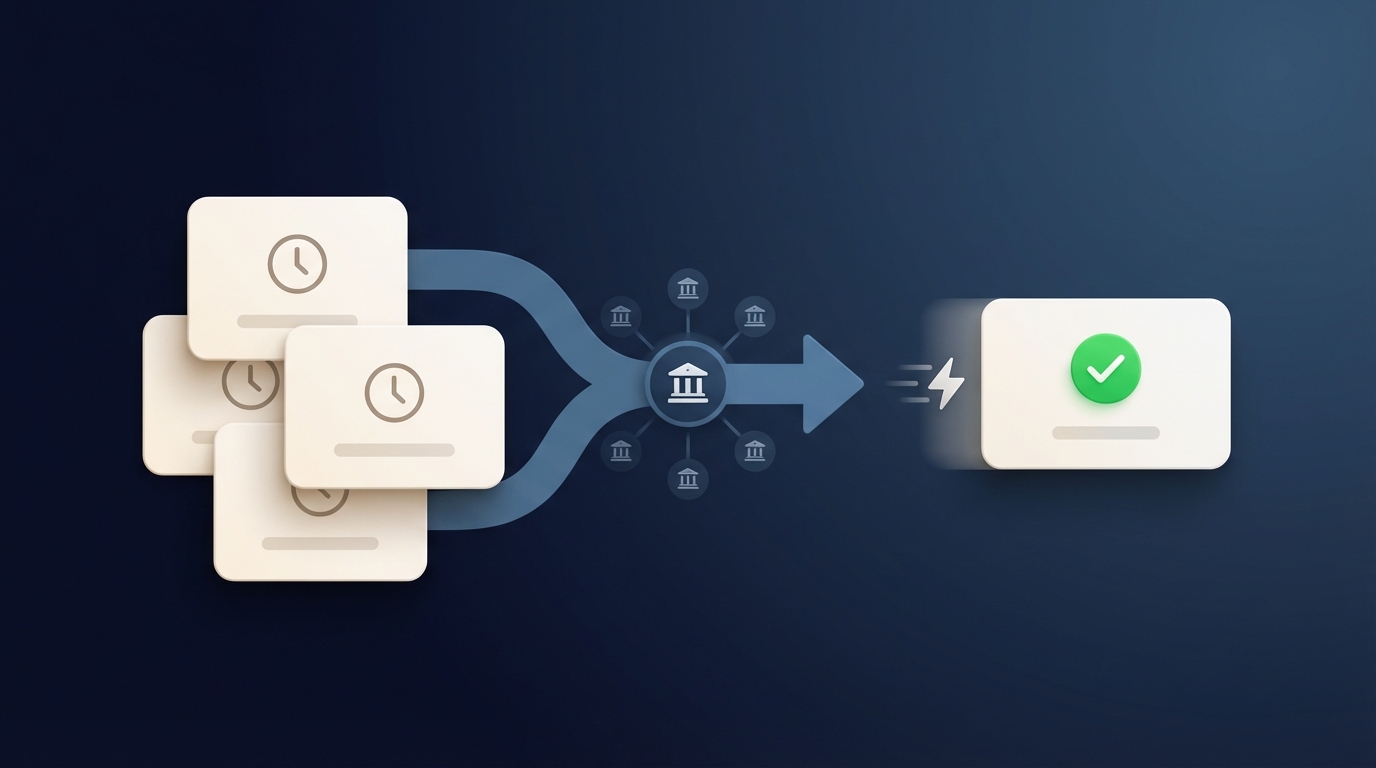
The Current Rails
Most money in the US still moves through a handful of rails that each made sense when they were built. ACH carries the bulk of it, the direct deposits and bill payments and account transfers. It's cheap and reliable, and it settles in batches, so a payment started Monday afternoon might not land until Tuesday or Wednesday. That was fine in a world where a day or two of float was just how things worked.
Wires are the fast option, same-day and often within hours, but they run $15 to $30 a transaction. That math works for a $500,000 home purchase and falls apart for splitting a dinner tab. Checks are somehow still here too, still clearing over days, still carrying their own fraud risk, still written by millions of people and businesses.
What always struck me, back when I was building on these rails, is how much work goes into hiding their seams. The app feels instant. The settlement underneath is anything but. None of these were designed for money that moves the moment you tap send.
What Changed
RTP from The Clearing House has been the only real-time option in the US since 2017, and the part that always struck me was how slow adoption stayed. About 350 institutions are connected, mostly larger banks. For a community bank, joining RTP meant working through The Clearing House's network. It was possible, but for an institution without a payments team sitting idle, it usually wasn't worth the work.
What makes FedNow different to me is that it runs through the Fed. Community banks already have a Federal Reserve relationship, so the path in is more familiar. That detail matters more than it sounds. It changes who realistically considers turning the rail on.
The mechanics themselves are not the interesting part. Money moves, settles in seconds, 24/7/365, no batching window. What's interesting is what disappears when settlement becomes immediate, and that's where my attention goes.
The Community Bank Question
The way I'd frame the decision for a community bank is not whether real-time payments will matter. They will. It's timing, and the timing problem has more sides than it first looks.
Going early means meeting expectations that are already set. Venmo, Zelle, and Cash App taught people that money moves instantly, even when the rails underneath were still batching behind the scenes. FedNow makes the actual settlement instant, not just the notification, and that gap will start to be visible to clients who care.
Going early also means absorbing what changes operationally, and that's the part I find harder. Fraud detection assumes a window of time to look at a transaction before it's irrevocable, and that window collapses. Liquidity management stops being an end-of-day calculation and starts being a real-time one. Neither of those is a tweak.
And then there's cost, which is the constraint that shapes most things at this scale. Core support, integration, training, process updates. For a bank with limited technology resources, this investment competes with everything else on the list, and being on the wrong side of that prioritization call can hurt for a long time.
What I'm Watching
I don't think this is a question of if, but when. The 35 institutions live today will be hundreds within a year, and the network effects will make participation increasingly necessary. Once enough banks are on FedNow, not being on it becomes a competitive disadvantage.
What interests me most is how quickly the fraud and risk frameworks catch up. The tools that work in a batch-processing world don't automatically translate to real-time. That's a problem the industry is going to have to solve together, and I think it's where a lot of the hard work lies ahead.