A Year of AI in Banking
What I've Learned Outside of Work, and What I'm Thinking About
A year ago, ChatGPT showed up and changed the conversation. I've spent a lot of personal time since then digging into what these tools can actually do. My assumption going in was that everything would change overnight. What I've learned is more bounded, and more interesting, than that.
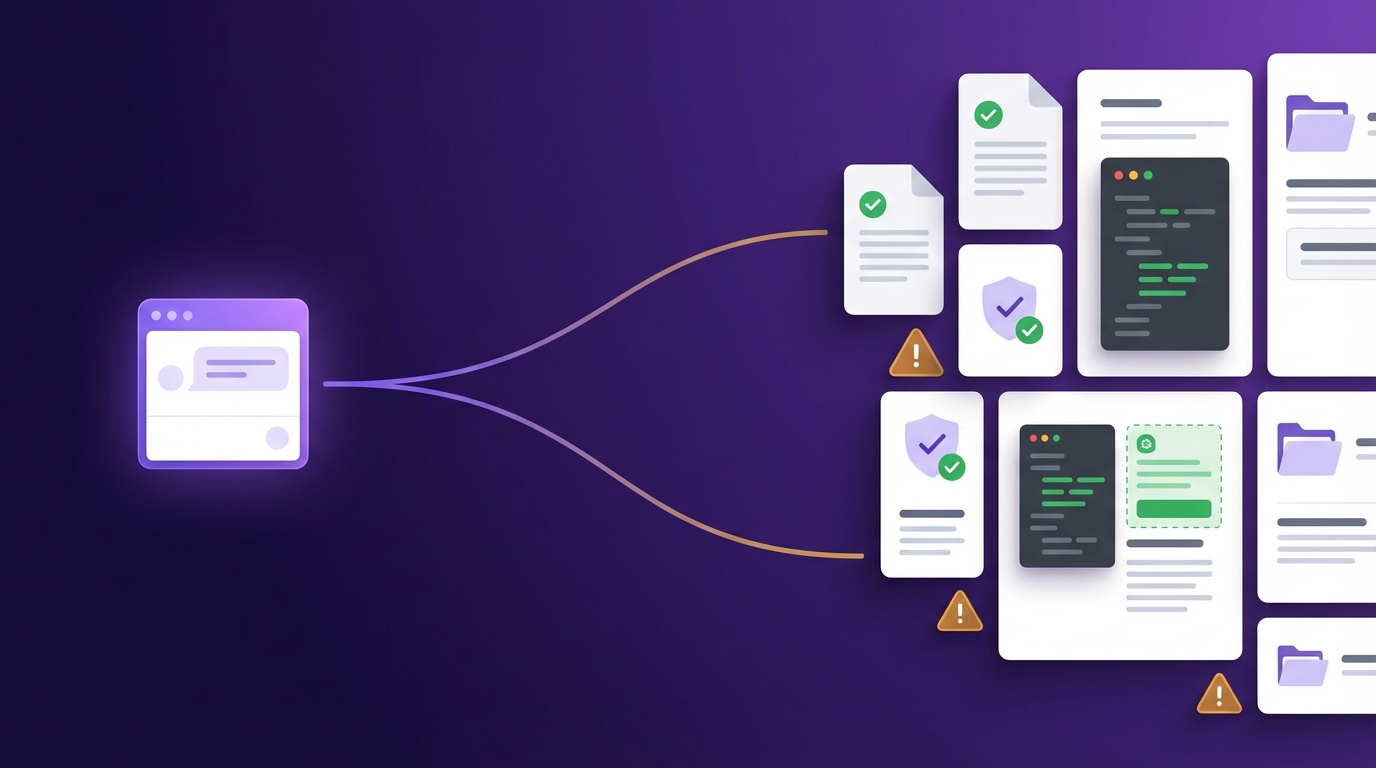
A regulated industry like banking is not the place to learn AI in real time. There is no policy yet that I would consider sufficient for production use, and until that exists, my engagement with these tools is on personal time, on personal projects, building familiarity. The motivation is not to deploy anything yet. The motivation is to be ready, with direct experience, when the operational and regulatory infrastructure catches up.
What I've Spent Time On
The technical learning curve has been steep but rewarding. I've used the tools for side coding, writing experiments, and just exploring capabilities. Working with the current generation of models gives me a much better sense of what they can do than reading about them ever would. That difference matters when the conversation eventually turns to operational use.
Where the Tools Are Solid
Long-form summarization is reliable. Take a long document, ask for the gist, and you get back something coherent that reflects the source. Useful when you're trying to get oriented in a new domain on your own.
First-draft writing is genuinely good. Memos, summaries, structured documents in personal projects. Editing a decent draft is faster than writing from a blank page. I've felt this consistently across formats.
Code assistance has changed how I work on personal coding. Writing SQL by hand feels slow now. Prototyping something new takes a fraction of the time it used to. Debugging gets a second pair of eyes that doesn't get tired. None of this makes a headline. It adds up.
Where I'd Be Cautious in Banking
A regulated industry has a different bar. The things that make AI useful in personal exploration are the same things that make it risky in production banking.
Hallucination is the obvious one. A model that confidently produces a wrong answer is a problem in any context. In a client interaction at a bank, it is unacceptable. The technology has improved. The hallucination rate has not gone to zero, and from how the architecture works, it is not going to. Until the failure mode is understood and bounded by policy, I would not put a model in front of a client.
Autonomous action is the other place I get cautious. The current generation can plan and execute. The governance frameworks for letting models do that inside a bank do not exist yet. Even when the technology can do something, that does not mean the rules and review processes are ready for it. The order in regulated industries is always governance first, deployment second.
What Surprised Me
There are plenty of polished AI products being marketed at banks. The demos are usually much further along than the products. The interesting question is never "what did the demo do" but "what happens when you push on it the way real operations do."
I also did not expect how much value would show up in places I had not planned for. Code, in particular. I started the year thinking AI would mostly help with text. I'm ending it convinced that the technical leverage is at least as important as the writing leverage, and possibly more.
What I'm Watching For
The conversation has shifted from "what is this" to "how do we use it safely." That is the right shift. The unglamorous work, governance frameworks, data classification, vendor review, policy, training, is what determines whether a bank can ever responsibly use this. The models will keep improving. The question is whether the operational and regulatory infrastructure can catch up. I'm cautiously optimistic, and I'm building my own muscle in the meantime so I'm ready when it does.