Rethinking Bank Operations
Modernizing Operations Without Losing the Relationship
For a while now, operations has struck me as the place where technology could do the most good inside a community bank. Not the headline projects. The day to day work of serving clients and moving loans through the pipeline. The easy assumption is that more automation is the goal in itself. I see it differently. The point of operations technology is to make the bank faster, more responsive, and easier to work with, for clients and for the people serving them. That is a different target than automation for its own sake.
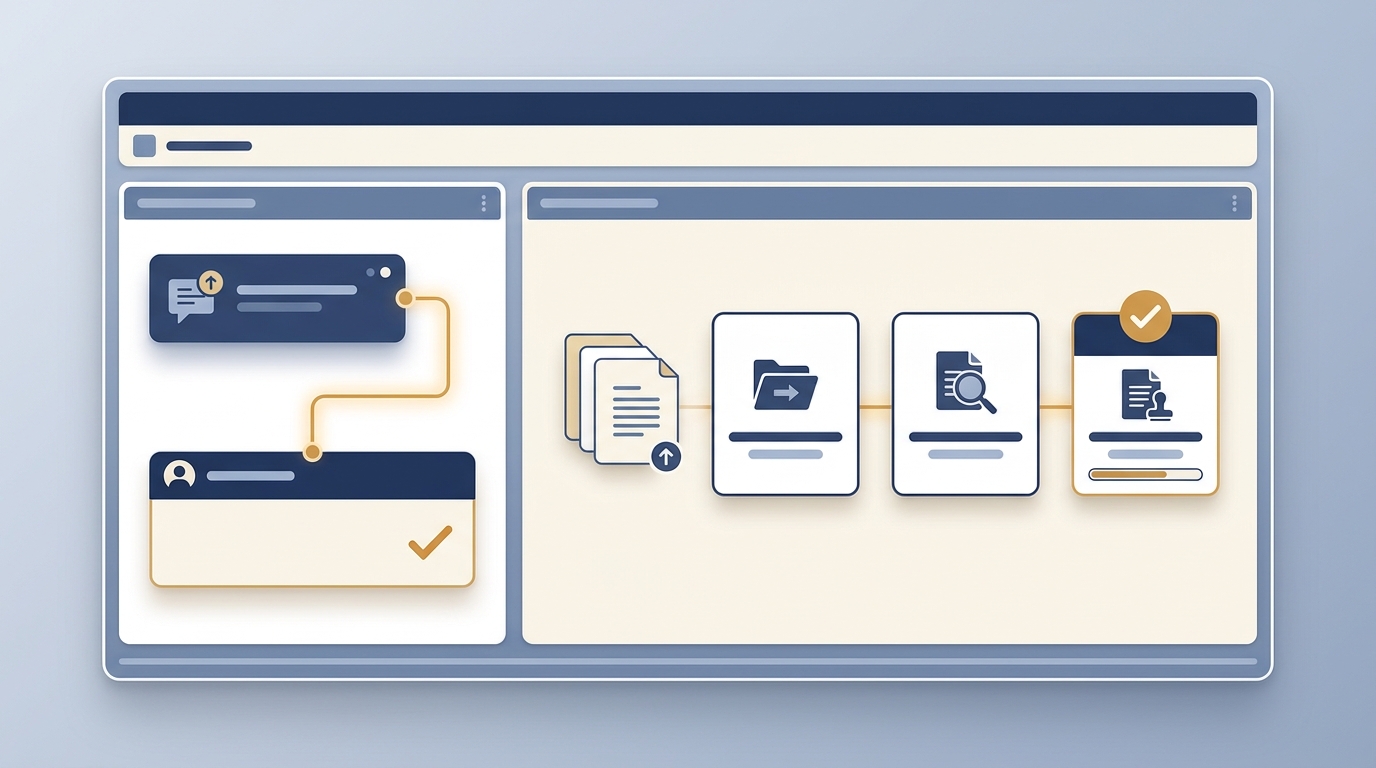
Client Service
Client service is the easiest place to see what's working and what isn't. I've spent personal time getting familiar with the tools that have shown up in this space, and the real picture is more mixed than the marketing suggests.
A few things genuinely help. Natural language routing can get a client to the right person instead of through a phone tree built in 2004. Self-service options handle the routine requests a client might want at any hour, the balance checks and branch hours and password resets that someone wants taken care of at 2am without waiting for the branch to open. And what's often called agent assist pulls the right account information onto one screen so the person helping a client isn't digging through three systems to answer a basic question.
Where it falls apart is full automation of anything that isn't routine. The moment a situation involves real money, real stress, or a judgment call, a client wants a person, not a script. So the value of these tools is in clearing the routine noise, which gives the people doing the work room to spend their time on the conversations that genuinely need them.
Loan Origination
Loan origination is the other half of this, and it's where the gap between how things work and how they could work is widest. At a lot of community banks the process is still heavy on paper, manual handoffs, and waiting.
What I find interesting is that the slow part usually isn't the credit decision, which is the part you want a person making anyway. It's everything around it. Collecting documents, re-keying the same information into three different systems, waiting for one desk to pass a file to the next. That's a workflow problem before it's anything fancier. Digitizing intake, connecting systems that don't talk to each other, and taking duplicate data entry off people's plates would do more for most banks than any single clever model. None of it is exotic. It mostly requires deciding the current process isn't good enough anymore.
What Automation Is For
It comes down to this. Automation in a community bank should give people more time for the relationships and make the institution more responsive and easier to work with.
The relationship is the reason a community bank exists. A client who wanted a purely automated experience already has one waiting at a megabank or a fintech app. The reason to bank with the institution down the street is that someone there actually knows them. The right technology protects that. It takes the busywork off people's plates so they can be present for the moments that matter, the loan that helps a family buy a home, the small business owner who needs someone to pick up the phone.
So the question I'd ask of any operations project is simple. Does it give our people more time for clients, make the bank more responsive, and make the experience better on both sides of the desk? Get that framing right and the technology choices start to make themselves.