Making Sense of the Core System
Why It Shapes Bank Technology
The core banking system keeps coming up as one of the biggest constraints on what's possible in bank technology. I have started to understand why.
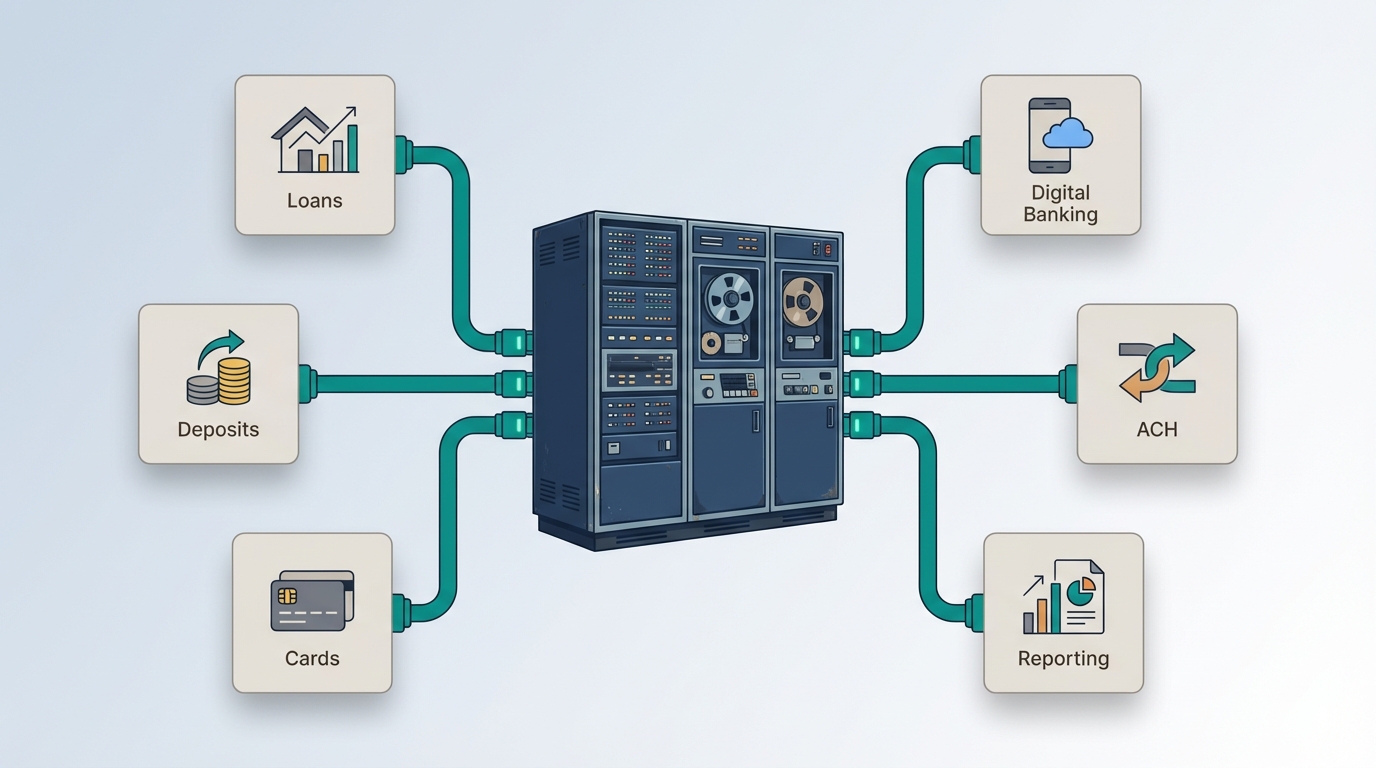
What the Core Does
The core banking system is the system of record for nearly every piece of data a bank touches, including account balances, transaction history, client information, and general ledger entries. When a deposit posts or a loan payment clears, it happens in the core.
Think of it as a database that can never be wrong. If the core says an account has $1,000, that's the balance. Other systems might cache data or show pending transactions, but the core is the source of truth. This makes it the most important and most constrained piece of technology in any bank.
Integrations
What stands out is how many systems connect to the core. Loan origination, digital banking, card processing, wire transfers, ACH, imaging, general ledger, regulatory reporting. Each pulls data from the core or sends data to it, some in real-time and most through batch files that run overnight.
Transactional databases prioritize consistency and reliability. The core is the ultimate example. ACID compliance isn't optional when it's people's money. This means the core wasn't designed for easy analytics or flexible integrations. It was designed to never lose a transaction.
Getting data out requires understanding the core's particular formats, batch schedules, and quirks. Reports that seem simple often depend on combining data from multiple sources, each with its own extraction process.
Why Old Tech Persists
Community banks typically run on systems from one of a few major vendors. These platforms have been around for decades, some with codebases that trace back to the mainframe era. That might sound alarming if you're used to modern software development, but there's a reason this technology persists.
Changing from one core to another, called a "core conversion," is one of the most disruptive projects a bank can undertake. Every account, every client relationship, every integration has to move correctly. If something goes wrong, it isn't a bug report. It is people unable to access their money. Staff also have to be retrained on the new system. The risk is enormous, and community banks with limited IT resources feel that risk acutely.
Given how many systems depend on the core, and the regulatory constraints banks operate under, most choose to stay with what works. The technology is old, but it has been working for decades. That counts for a lot.
Batch Processing
The other piece that stands out about core operations is the role of batch processing. In a typical tech environment, everything is real-time or close to it. In banking, significant portions of the day's work settle overnight.
End-of-day processing is when the core reconciles everything. Transactions post, interest accrues, reports generate. It's a controlled sequence that happens every night, and the next morning, balances are current and the books are balanced.
In a world where clients expect instant responses, this creates a real limitation. But accuracy doesn't have to be sacrificed for speed anymore. The opportunity is to build systems that provide real-time visibility while letting the core continue to do what it does best.
What This Means
Understanding the core clarifies a lot about why bank technology works the way it does. Data fragmentation across the bank stack isn't random. It's a consequence of dozens of specialized systems all orbiting a central core that was built for reliability, not flexibility. And because examiners care deeply about data integrity, audit trails, and controls, replacing the core means proving that any new system meets the same standards. That's a high bar.
The Path Forward
The core does what it was originally designed to do very well. The problem is that as banks evolved and needed more from their technology, core providers bolted on additional functionality over time. That's how the industry ended up with systems that are reliable at their foundation but awkward to work with at the edges.
The opportunity isn't to replace the core but to build a data layer alongside it, one that consolidates information from multiple systems and makes it accessible for analysis and automation. The core remains the source of truth. Banks can make better use of the truth it holds.