Making Sense of Stablecoins
Why Crypto Needed a Dollar
When I first dug into blockchain, I focused on the technology. Distributed ledgers, consensus, immutability. What I didn't spend enough time on was the most obvious problem with Bitcoin as actual currency. It moves too much. Accept $100 in Bitcoin today, and it might be worth $85 by Friday. I built a payments company. That kind of volatility makes a currency useless for commerce. So people built something to fix it.
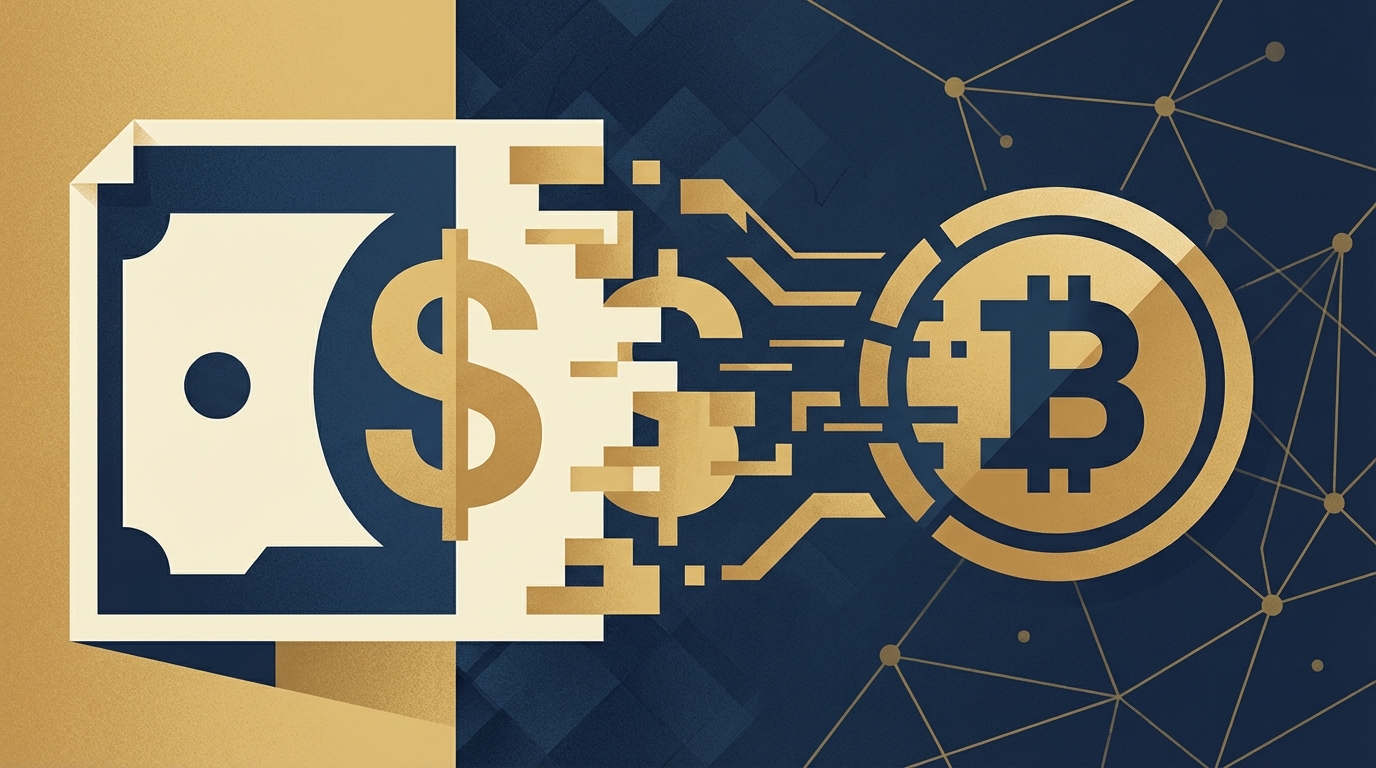
The Basic Idea
A stablecoin is pegged to the dollar. One token, one dollar. The concept clicked for me right away. An issuer collects dollars, holds them in reserve, and issues tokens on a blockchain. When someone wants to redeem, they return the token and get a dollar back. Simple enough.
What's interesting is what happens in between. The token moves on a blockchain 24/7, settles in minutes, and crosses borders without a wire transfer. It has the speed and programmability of crypto with the stability of cash. If you've ever waited three days for an ACH transfer to clear, you can see why this got people's attention.
How Big It Got
The first major stablecoin, Tether's USDT, launched in 2014. By the time I started paying attention, it had become the default way to move dollars in crypto, especially between exchanges. But Tether was always controversial. Questions about whether its reserves actually matched its outstanding tokens never really went away.
Circle and Coinbase launched USDC in 2018 as the transparent alternative, with regular reserve attestations and a deliberate push toward compliance. By early 2022, these two alone represented over $100 billion in circulating tokens.
What surprised me was how far beyond trading stablecoins had spread. DeFi protocols were using them as collateral. Businesses were experimenting with cross-border payments. The total market crossed $150 billion. What started as exchange plumbing had quietly become financial infrastructure. That's a pattern I've seen before, and it's usually the point where regulators start paying attention.
The Deposit Parallel
The business model is what really caught my attention. Issuers hold reserves in dollars and short-term treasuries, earning yield on those assets while the tokens circulate freely. The token holders don't earn interest. The issuer does.
Let's think about what that is. It's interest-free funding at massive scale. If you work inside a bank, you recognize the model immediately. It's deposits. Stablecoin issuers built the deposit side of a bank without a bank charter, without FDIC insurance, and without the regulatory overhead. That gap between what stablecoins do and how they're regulated is one of the most important questions in fintech right now.
The Algorithmic Bet
Not everyone followed the reserve model. The challenge with reserves is capital. For every dollar of tokens in circulation, you need a dollar locked up. I understand the appeal of finding an alternative, having spent time building products where capital efficiency was everything.
Terra took that bet with its stablecoin UST, trying to maintain the dollar peg algorithmically through a companion token called LUNA rather than actual reserves. The pitch was compelling. Scale a stablecoin without proportionally scaling reserves, using code and market incentives instead. By early 2022, UST had grown to roughly $18 billion in market cap.
Then, in May, the whole thing collapsed. We'll get into what happened and what it means for banks in the next post.
Why This Matters
Here is the mismatch. Stablecoin issuers hold tens of billions in dollar-denominated assets, issue instruments that function like deposits, and process payment-like transactions at scale. But they aren't banks. They don't face examiners, and their reserve disclosures are voluntary.
The President's Working Group on Financial Markets flagged exactly this in a November 2021 report, recommending that stablecoin issuers should be insured depository institutions. If stablecoins function like banking, the argument goes, they should be regulated like banking. For community banks, that recommendation isn't a threat. It's an opening.
Stablecoins are the most interesting thing to come out of crypto. Not because of the blockchain underneath, but because of the business model on top. A payment rail that holds a stable value, moves 24/7, and settles in minutes. Whether this stays outside the banking system or eventually comes inside is the question that keeps getting louder.